Roll-on / roll-off
RoRo transport — roll-on/roll-off vessel
In RoRo, the vehicle is driven on board under its own power and then lashed on an enclosed deck. It's the most direct and economical mode.
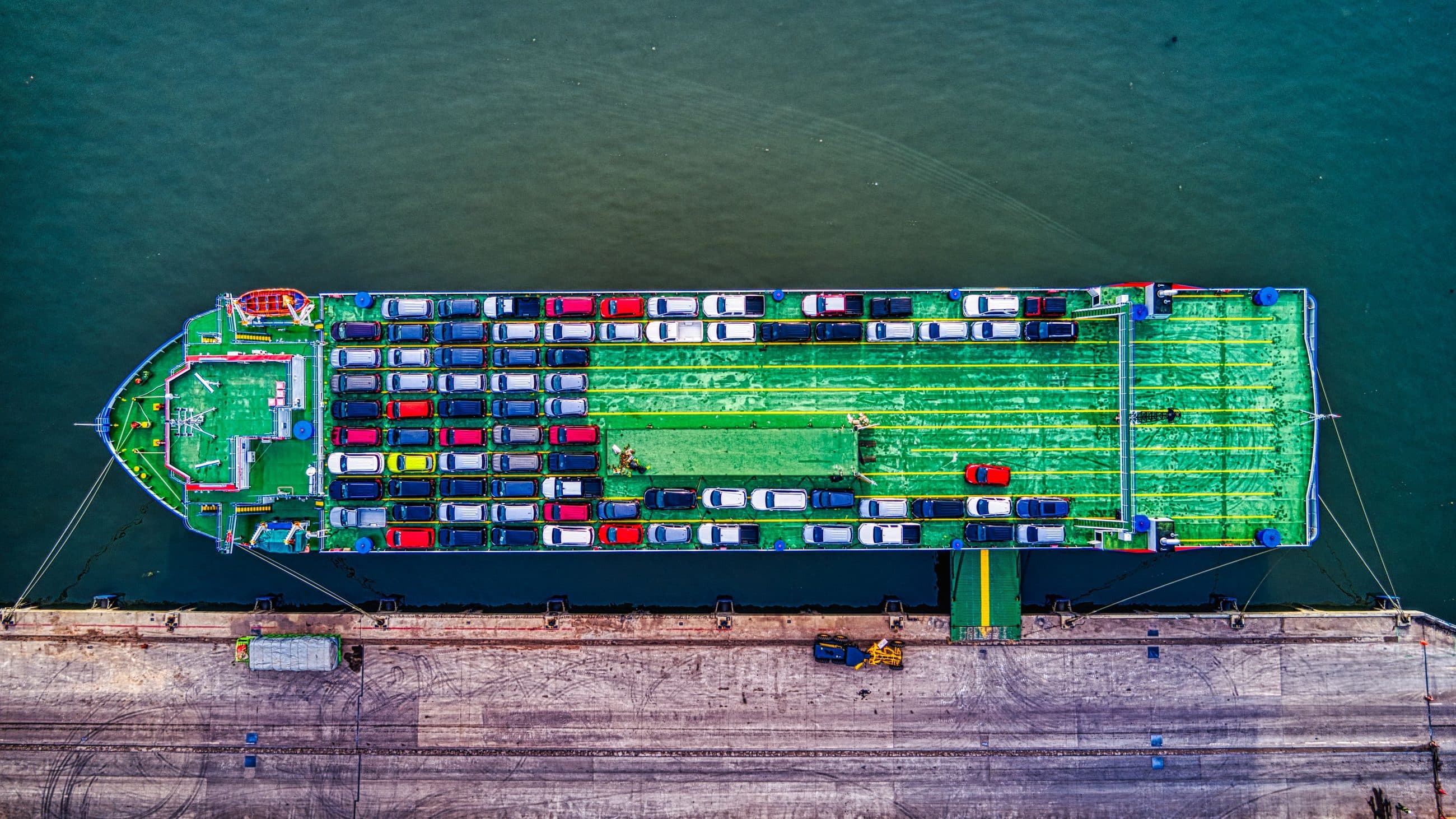
The RoRo vessel is a floating garage. The vehicle drives on board through an access ramp, is driven to its spot on one of the decks, and is then lashed to the floor for the entire crossing.
It's the oldest and most common mode for exporting used vehicles to Africa, because it avoids any packing operation: the vehicle is handled as-is, at its own size.
How a RoRo boarding works
The vehicle is presented at the terminal before the reception deadline set by the shipping line. A visual inspection is carried out and recorded: scratches, dents, general condition, mileage.
The vehicle is then driven on board by terminal staff, positioned on the assigned deck and lashed down. It is no longer accessible until unloading at the destination port.
The rules set by shipping lines
The vehicle must drive under its own power, start without assistance, brake and steer normally. A broken-down vehicle cannot travel by RoRo.
The cabin and boot must be empty: personal effects are generally refused on RoRo. Fuel level is limited, and the battery must be in working order.
These rules vary slightly from one shipping line to another. We send you the conditions applicable to your departure before the vehicle is received.
Free quote — no obligation
A vehicle to ship to Africa?
Send us the make, model, year and destination port. We'll respond with a quote and the most suitable shipping mode.